Understanding the Different Acids
One of the most useful things to know before booking a chemical peel is what each acid does best. Different acids suit different skin types and concerns, and a good practitioner will select the right one (or the right combination) based on your individual needs.
Glycolic acid
Best for: General brightening, anti-ageing, fine lines, dull skin
Glycolic acid is one of the most widely used peel ingredients. It belongs to the alpha-hydroxy acid (AHA) family and has the smallest molecule of any AHA, which means it penetrates the skin efficiently. It works by dissolving the bonds between dead skin cells, revealing brighter, smoother skin underneath. At higher concentrations, it also stimulates collagen production.
Glycolic acid peels are versatile and suit most skin types, making them a popular choice for a first-time peel. They range from gentle superficial peels (20 to 35%) to stronger medium-depth peels (50 to 70%).
Salicylic acid
Best for: Oily skin, acne, congested pores, blackheads
Salicylic acid is a beta-hydroxy acid (BHA), which means it is oil-soluble. This is the key difference from AHAs: salicylic acid can penetrate into the pores themselves, dissolving the oil, dead cells and debris that cause breakouts and congestion.
If your main concern is acne, blackheads or persistently oily skin, a salicylic acid peel is often the most targeted option. It also has natural anti-inflammatory properties, which helps calm active breakouts and reduce the redness that comes with them.
Mandelic acid
Best for: Sensitive skin, mild pigmentation, acne-prone skin that is also sensitive
Mandelic acid is another AHA, but it has a larger molecule than glycolic acid, which means it penetrates the skin more slowly and gently. This makes it an excellent option for people with sensitive or reactive skin who want the benefits of an acid peel without the intensity.
It is also a good choice for darker skin tones, as the slower penetration reduces the risk of post-inflammatory hyperpigmentation. Mandelic acid has antibacterial properties too, making it effective for mild acne alongside its brightening and smoothing effects.
Lactic acid
Best for: Dry skin, dehydrated skin, mild pigmentation, sensitive skin
Lactic acid is one of the gentlest AHAs. It exfoliates the surface while also attracting moisture to the skin, which makes it particularly well-suited to dry or dehydrated skin types. If your skin feels rough and tight rather than oily and congested, a lactic acid peel can smooth the texture while restoring some of the hydration your skin is missing.
It is also effective for mild pigmentation and uneven skin tone, and is gentle enough to use on most skin types including those that find glycolic acid too intense.
Azelaic acid
Best for: Rosacea, pigmentation, acne, post-inflammatory marks
Azelaic acid is slightly different from the other acids on this list. It has anti-inflammatory, antibacterial and anti-pigmentation properties all in one, which makes it a particularly versatile ingredient. It is one of the few acids that is considered safe to use during pregnancy (always confirm with your practitioner), and it is especially effective for rosacea-prone skin, where other acids might cause flare-ups.
If you have a combination of redness, mild acne and post-inflammatory dark marks, azelaic acid targets all three.
TCA (trichloroacetic acid)
Best for: Pigmentation, sun damage, acne scarring, deeper skin renewal
TCA is a stronger acid used in medium-depth peels. It reaches beyond the surface layer of the skin and into the upper dermis, making it effective for more stubborn concerns like moderate pigmentation, sun damage and acne scarring. TCA peels produce visible peeling and require more downtime than superficial AHA or BHA peels.
At House of Aesthetics, we offer BioRePeel, a next-generation TCA peel that combines trichloroacetic acid with alpha and beta hydroxy acids, enzymes and vitamins in a bi-phase formula. Unlike traditional TCA peels, BioRePeel is designed to deliver deep exfoliation with minimal visible peeling and significantly less downtime.
Learn more about BioRePeel
Jessner peel
Best for: Combination concerns, acne plus pigmentation, multi-layered skin issues
The Jessner peel is a combination formula that blends salicylic acid, lactic acid and resorcinol. This multi-acid approach allows it to address several concerns simultaneously: congestion, pigmentation, texture and dullness. It sits between a superficial and medium peel in terms of intensity and is often used when a single acid alone is not enough.
Which Chemical Peel Is Right for Your Skin Concern?
| Your main concern | Best acid/peel type | Why |
|---|
| Dull, tired skin | Glycolic acid (superficial) | Fast, effective brightening with minimal downtime |
| Oily skin and acne | Salicylic acid | Penetrates pores to dissolve oil and clear congestion |
| Blackheads and congestion | Salicylic acid | Oil-soluble, cleans inside the pore |
| Sensitive skin | Mandelic acid or lactic acid | Gentler penetration, less risk of irritation |
| Dry, dehydrated skin | Lactic acid | Exfoliates while attracting moisture to the skin |
| Mild pigmentation | Mandelic acid, glycolic acid or azelaic acid | Gentle brightening without aggressive stripping |
| Stubborn pigmentation or melasma | TCA peel or Cosmelan | Deeper penetration to target pigment at its source |
| Acne scarring | TCA peel, glycolic acid (medium) or Jessner peel | Reaches deeper layers to stimulate collagen repair |
| Sun damage | TCA peel or glycolic acid (medium) | Resurfaces damaged skin and promotes renewal |
| Rosacea and redness | Azelaic acid | Anti-inflammatory without aggravating redness |
| Fine lines and early ageing | Glycolic acid | Stimulates collagen production and smooths texture |
| Multiple concerns at once | Jessner peel or BioRePeel | Multi-acid approach addresses several issues simultaneously |
| Pre-event glow | Glycolic acid or lactic acid (superficial) | Quick refresh with no visible peeling |
What Chemical Peels Do We Offer?
At House of Aesthetics in Bromley, we offer a range of chemical peels tailored to different skin types and concerns:
Glycolic acid peels for brightening, anti-ageing and general skin renewal.
Mandelic acid peels for sensitive skin and mild pigmentation.
Salicylic acid peels for oily, acne-prone skin and congestion.
Azelaic acid peels for rosacea, pigmentation and post-inflammatory marks.
Jessner peels for combination concerns that need a multi-acid approach.
BioRePeel (TCA-based) for deeper exfoliation and rejuvenation with minimal downtime.
Cosmelan Depigmentation Peel for severe pigmentation and melasma. This is a medical-grade treatment that targets all types of hyperpigmentation, including hormone-induced melasma.
We also offer Green Peel, a natural herbal alternative that achieves skin renewal without any synthetic acids. If you are unsure whether a chemical peel or a natural peel is better for your skin, we have a detailed comparison in our guide to Green Peel vs Chemical Peels.
View our full range of skin peel treatments
What to Expect: Before, During and After a Chemical Peel
Before your peel
Your practitioner may ask you to stop using certain active skincare products (retinoids, AHAs, vitamin C serums) for 3 to 7 days before your appointment, depending on the type of peel. This reduces the risk of over-sensitising the skin. You should also avoid sunbeds and prolonged sun exposure for at least 2 weeks beforehand.
During the peel
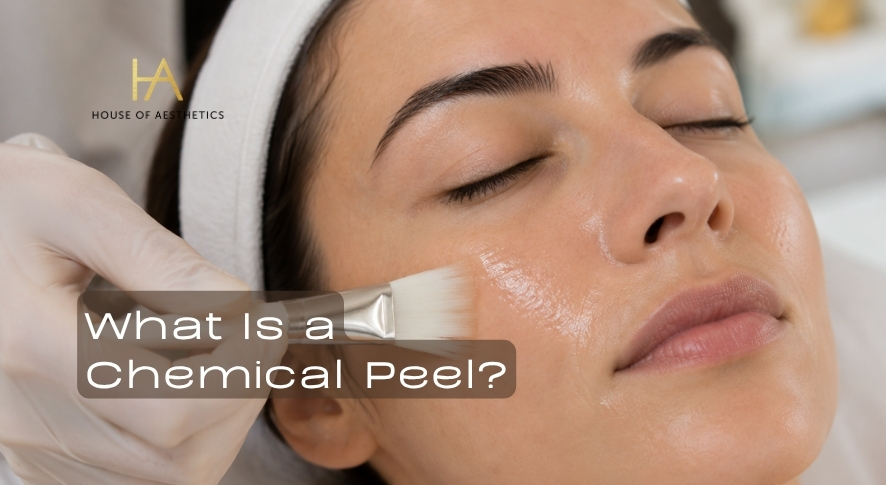
The peel solution is applied to clean, dry skin using a brush or gauze pad. You will feel a tingling or warm sensation as the acid gets to work. For superficial peels, this is mild and settles quickly. For medium peels, the sensation is more intense but manageable. Your practitioner will monitor your skin throughout and neutralise the peel at the right time.
A superficial peel session typically takes 20 to 30 minutes. Medium peels may take 30 to 45 minutes.
After your peel
Superficial peels: Your skin may look slightly pink for a few hours. You might experience mild flaking over the next day or two, but it is usually subtle enough that it does not interfere with your daily life. You can apply makeup the following day.
Medium peels: Expect visible redness, tightness and noticeable peeling for 5 to 7 days. The peeling is a normal part of the process; do not pick at it or try to speed it up. Let the skin shed naturally. Avoid makeup for the first 2 to 3 days and use only the aftercare products your practitioner recommends.
All peels: Wear SPF 30+ every day for at least 4 weeks after treatment. Your newly revealed skin is more susceptible to UV damage, and sun exposure can undo the brightening and evening effect of the peel. Avoid active skincare ingredients (retinoids, AHAs, BHAs) until your practitioner advises it is safe to reintroduce them.
Who Should Avoid Chemical Peels?
Chemical peels are suitable for most adults, but they are not recommended if:
- You are pregnant or breastfeeding (most chemical peels are contraindicated; azelaic acid is a possible exception, but always confirm with your practitioner)
- You have active eczema, psoriasis or dermatitis in the treatment area
- You have open wounds, active cold sores or sunburn on the face
- You have used isotretinoin (Roaccutane) within the last 6 to 12 months
- You have a history of keloid scarring
If you have darker skin (Fitzpatrick types IV to VI), chemical peels can still be highly effective, but the acid type and concentration need to be chosen carefully to minimise the risk of post-inflammatory hyperpigmentation. Mandelic acid and azelaic acid are generally the safest choices for darker skin tones. Your practitioner will assess your skin and recommend the most appropriate option during your consultation.
 Skip to content