• Book Your Appointment
  • Buy Your Treatment Now
  • Offers
  • Price List
  • Team
  • Blog
  • Contact Us
Dermarolling at Home vs Professional Microneedling

Date

Dermarolling at Home vs Professional Microneedling

If you have spent any time on skincare TikTok or browsing Amazon beauty deals, you have probably seen dermarollers marketed as a shortcut to smoother, firmer, younger-looking skin. At under £20 for a device, the appeal is obvious. Roll a small barrel of tiny needles across your face, boost your collagen, and skip the clinic altogether.

But here is the reality: a 0.25 mm at-home dermaroller and a professional Dermapen session are not even close to the same treatment. They differ in depth, precision, sterility, and, most importantly, results. Before you invest time and trust in a device that may not deliver what your skin actually needs, it is worth understanding exactly what each approach can and cannot do.


At House of Aesthetics London in Bromley, we perform clinical microneedling using medical-grade Dermapen technology. This article is not about discouraging you from looking after your skin at home. It is about giving you the facts so you can make a genuinely informed choice.

What Is a Dermaroller and How Does It Work?

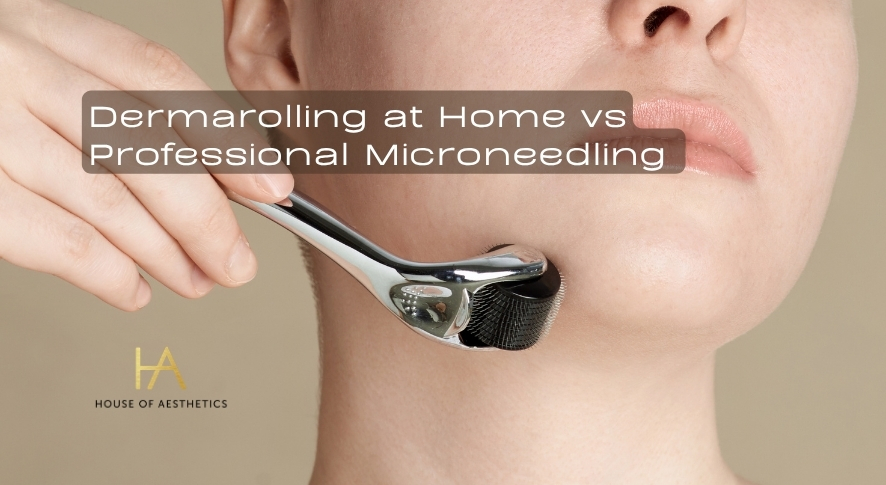
A dermaroller is a handheld device shaped like a small paint roller, studded with rows of fine stainless steel needles. Most at-home versions feature needles between 0.2 mm and 0.5 mm in length. You roll the device across your skin in multiple directions to create superficial micro-punctures.

The idea behind it is sound in principle. Creating tiny, controlled injuries in the skin triggers a wound-healing response that can stimulate some degree of collagen and elastin activity. Research published in the Indian Journal of Dermatology, Venereology and Leprology confirms that microneedling as a concept leads to the release of growth factors, including platelet-derived growth factor and fibroblast growth factor, which encourage new collagen formation (source).

However, there is a significant gap between the biological principle and what an at-home device can actually achieve.

At-home dermarollers with needles of 0.2 to 0.3 mm only reach the outermost layer of skin, the epidermis. They do not penetrate deeply enough to trigger meaningful collagen induction in the dermis, where structural remodelling takes place. Their primary benefit is improving the absorption of topical skincare products. Studies suggest at-home rollers can increase product absorption by up to 200%, which is helpful for your serums but not the same as genuine skin remodelling (source).


What Is Professional Microneedling?

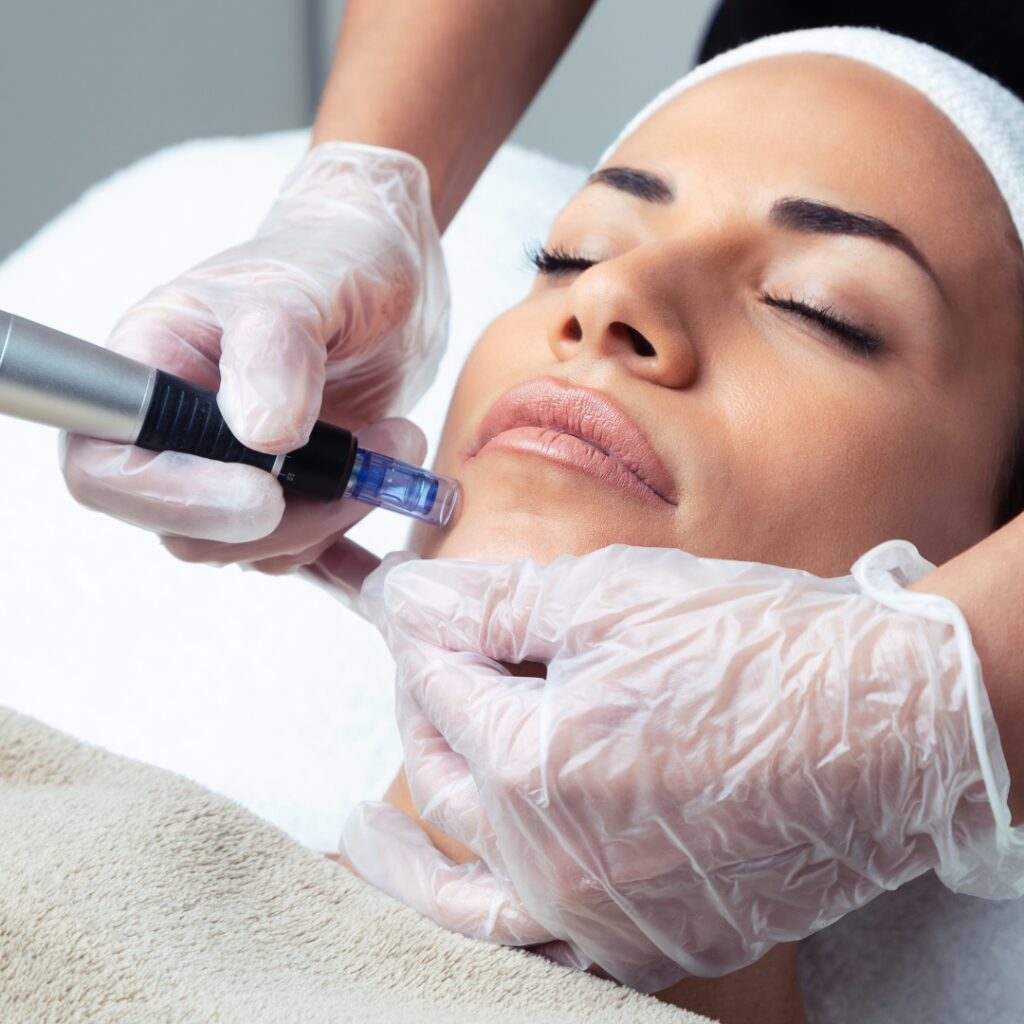
Professional microneedling, also known as collagen induction therapy, uses a motorised pen device (such as a Dermapen) equipped with a disposable sterile needle cartridge. Unlike a dermaroller, the needles move vertically, oscillating rapidly up and down to create clean, precise micro-channels in the skin.

The key differences lie in depth and control. Professional devices can operate at depths ranging from 0.5 mm up to 2.5 mm, depending on the treatment area and the specific concern being addressed. Your practitioner adjusts the needle depth across different zones of the face; shallower around delicate areas like the eyes, deeper over scarred or thickened skin.

This level of customisation simply is not possible with a fixed-depth dermaroller.

Clinical research demonstrates that professional microneedling produces substantial results. A review published in the Indian Dermatology Online Journal found that four sessions spaced one month apart resulted in up to a 400% increase in collagen and elastin deposition at six months post-treatment (source). That is not a marginal improvement. It represents a fundamental shift in the skin’s structural integrity.

Needle Depth: Why It Matters More Than You Think

The depth at which needles penetrate the skin determines which biological processes are activated. Here is a simplified breakdown:

Needle DepthSkin Layer ReachedWhat It Does
0.2 – 0.3 mmEpidermis (surface)Enhances product absorption; minimal collagen stimulus
0.5 mmUpper dermisBegins to activate fibroblasts and collagen production
1.0 – 1.5 mmMid dermisTargets acne scarring, fine lines, and skin laxity
2.0 – 2.5 mmDeep dermisAddresses deep scars, stretch marks, and advanced rejuvenation

At-home dermarollers sit firmly in the top row of that table. They scratch the surface, quite literally. For genuine collagen induction therapy to occur, needles need to reach at least 0.5 mm, a depth that clinical guidance consistently recommends be administered by a trained professional in a sterile environment.

Research published in the journal Dermatologic Surgery found that the depth of new collagen formation (neocollagenesis) reached 5 to 600 micrometres when using a 1.5 mm needle length, confirming that meaningful structural remodelling requires depths beyond what most home devices offer (source).

microneedling skin treatment

The Sterility Problem With At-Home Dermarollers

Perhaps the most underappreciated risk of at-home dermarolling is hygiene. Every time you create openings in the skin, you create a direct pathway for bacteria, fungi, and viruses to enter. In a clinical setting, practitioners use single-use, sterile needle cartridges that are disposed of after every treatment. The treatment area is prepped with antiseptic, and strict infection control protocols are followed throughout.

At home, the situation is very different. Dermarollers are frequently reused, and thorough sterilisation between sessions is difficult to achieve without professional-grade equipment. The US Food and Drug Administration (FDA) specifically highlights infection risk as a concern with home microneedling devices, noting that improper cleaning or sharing of devices can introduce harmful pathogens (source).

There have been documented cases of necrotic facial ulcers (tissue death) following at-home microneedling combined with non-sterile topical products, as well as delayed granulomatous reactions, which are persistent inflammatory nodules that can require medical treatment (source).

These outcomes are rare, but they are real, and they are far more likely when needling is performed outside a controlled clinical environment.

Rolling vs Vertical Needling: The Angle of Entry

This is a technical detail that makes a practical difference. When you use a dermaroller, the cylindrical shape means needles enter the skin at an angle as the barrel rotates. This angled entry can cause lateral tearing of the tissue rather than clean punctures, which increases the risk of surface trauma, irritation, and inconsistent results.

A Dermapen, by contrast, drives needles straight in and straight out at high speed, creating uniform vertical channels. This results in less surface trauma, more even treatment coverage, and better healing. The vertical motion also means the device can navigate contoured areas like the nose, around the eyes, and along the jawline with far greater precision than a rigid roller can achieve.

microneedling treatment bromley

What Can Professional Microneedling Treat?

At House of Aesthetics London, we use microneedling to address a wide range of skin concerns, including:

Acne scarring. Research published in PMC demonstrates that microneedling has comparable efficacy to laser treatments for atrophic facial scars, with the added advantage of being better tolerated and carrying a lower risk of post-inflammatory hyperpigmentation, particularly in darker skin types (source).

Fine lines and wrinkles. By stimulating new collagen and elastin production in the dermis, microneedling firms and plumps the skin from within. Collagen remodelling peaks around four to six weeks after each session and continues to improve over the following months.

Uneven skin texture and enlarged pores. Increased collagen density tightens the skin’s surface structure, refining pore appearance and smoothing rough texture.

Hyperpigmentation and sun damage. Accelerated cell turnover helps to fade dark spots and even out skin tone, without the risks of heat-based treatments on melanin-rich skin.

General skin rejuvenation. Even without a specific “problem” to fix, microneedling improves overall skin quality, giving it a healthier, more luminous appearance.

A dermaroller can complement a skincare routine by improving serum absorption between professional treatments, but it cannot replicate any of these clinical outcomes on its own.

What to Expect During a Dermapen Session at House of Aesthetics

If you are considering professional microneedling at our Bromley clinic, here is what a typical session involves:

Your appointment begins with a thorough skin assessment. Your practitioner evaluates your skin type, concerns, and any contraindications (such as active acne, eczema, or recent retinoid use) before proceeding.

A topical anaesthetic cream is applied to the treatment area and left for approximately 45 minutes to ensure comfort. Once the skin is prepped with antiseptic, the Dermapen is passed methodically across the face (or neck, décolletage, or other target areas), with the needle depth adjusted zone by zone.

The treatment itself typically takes 20 to 30 minutes. Immediately afterwards, you may notice redness similar to mild sunburn, which usually subsides within a day or two. Most clients return to their normal routine the following day.

For optimal results, we generally recommend a course of three to four sessions spaced four to six weeks apart. The collagen remodelling process continues for months after your final session, with progressive improvements in firmness, texture, and tone.

The Bottom Line: Where Does Each Approach Fit?

 At-Home DermarollerProfessional Microneedling (Dermapen)
Needle depth0.2 – 0.5 mm0.5 – 2.5 mm (adjustable)
Needle motionAngled (rolling)Vertical (oscillating)
SterilityReusable; difficult to sterilise fullySingle-use sterile cartridge
Collagen inductionMinimalSignificant (up to 400% increase at 6 months)
Best forEnhancing serum absorption between clinic visitsScarring, fine lines, texture, rejuvenation
Performed bySelf-administeredTrained practitioner
Risk levelHigher due to lack of clinical oversightLower with professional protocols

A dermaroller is not a bad product when used sensibly for what it is designed to do: gently boosting serum penetration as part of a home skincare routine. But if your goal is genuine skin remodelling, scar improvement, or anti-ageing results backed by clinical evidence, professional microneedling is the treatment that delivers.

Frequently Asked Questions

Is a dermaroller the same as microneedling? Not quite. Both use fine needles to create micro-injuries in the skin, but they differ significantly in depth, precision, and results. A dermaroller is a manual device with fixed, shallow needles best suited to improving product absorption. Professional microneedling uses an automated pen with adjustable depth to stimulate meaningful collagen production in the deeper layers of the skin.

Can I use a dermaroller at home instead of getting professional microneedling? You can use a dermaroller at home to complement your skincare routine, particularly for enhancing serum absorption. However, home devices cannot replicate the collagen induction, scar improvement, or skin remodelling results that professional microneedling achieves. They also carry higher infection risks due to the difficulty of maintaining clinical-grade sterility at home.

How deep do microneedling needles go compared to a dermaroller? Most at-home dermarollers use needles of 0.2 to 0.5 mm, which only reach the epidermis. Professional Dermapen devices can be adjusted from 0.5 mm up to 2.5 mm, reaching the dermis where collagen and elastin are produced. This deeper penetration is what drives visible, lasting results.

Is microneedling painful? A topical numbing cream is applied before treatment, so most clients experience only mild pressure or a light tingling sensation. Professional microneedling with proper anaesthetic is generally well tolerated, even by those who are nervous about needles.

How many microneedling sessions will I need? Most treatment plans involve three to four sessions spaced four to six weeks apart, though this varies depending on your skin concerns and goals. Collagen remodelling continues for several months after your final session, so results are cumulative and progressive.

Is microneedling safe for darker skin tones? Yes. One of the advantages of microneedling over some laser treatments is its suitability for darker skin types. Research shows it carries a lower risk of post-inflammatory hyperpigmentation compared to many heat-based alternatives. Your practitioner will tailor the treatment depth to your individual skin type.

Can I use a dermaroller between professional microneedling sessions? A very short-needled dermaroller (0.2 to 0.25 mm) can be used between professional sessions to help active ingredients in your skincare penetrate more effectively. Always follow your practitioner’s specific guidance on timing and aftercare.

Book a Free Microneedling Consultation in Bromley

If you are curious about what professional microneedling could do for your skin, we would love to help you find out. At House of Aesthetics London, we offer complimentary consultations where we assess your skin, discuss your goals, and recommend a personalised treatment plan.

Book your free consultation here or call us at our Bromley clinic to arrange an appointment.


Sources:

  1. Abhijeet Kumar Jha et al., “Microneedling with Dermaroller,” Journal of Cutaneous and Aesthetic Surgery, PMC, 2010 – https://pmc.ncbi.nlm.nih.gov/articles/PMC2918341/
  2. Satish Savant et al., “Microneedling: Advances and Widening Horizons,” Indian Dermatology Online Journal, PMC, 2016 – https://pmc.ncbi.nlm.nih.gov/articles/PMC4976400/
  3. Iriarte et al., “Review of Applications of Microneedling in Dermatology,” Clinical, Cosmetic and Investigational Dermatology, PMC, 2017 – https://pmc.ncbi.nlm.nih.gov/articles/PMC5556180/
  4. US Food and Drug Administration, “Microneedling Devices: Getting to the Point on Benefits, Risks and Safety” – https://www.fda.gov/consumers/consumer-updates/microneedling-devices-getting-point-benefits-risks-and-safety
  5. Dr Caroline Warden, “Why I Don’t Recommend At-Home Microneedling with a Derma Roller,” 2025 – https://www.drcarolinewarden.co.uk/journalblog/why-i-dont-recommend-at-home-microneedling-with-a-derma-roller
  6. Alhattab et al., “Microneedling in Dermatology: A Comprehensive Review of Applications, Techniques, and Outcomes,” PMC, 2024 – https://pmc.ncbi.nlm.nih.gov/articles/PMC11499218/

More
articles