The Questions That Usually Decide It
Where are the veins?
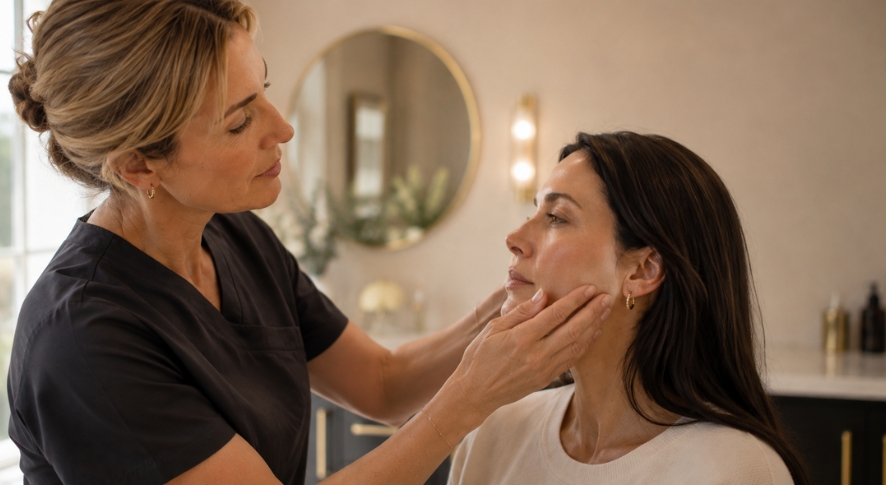
This is the biggest single factor. For facial thread veins and broken capillaries, laser is generally the approach of choice. Sclerotherapy is primarily a leg treatment.
On the legs, both treatments can play a part, which is why the next question matters.
Are there larger veins feeding them?
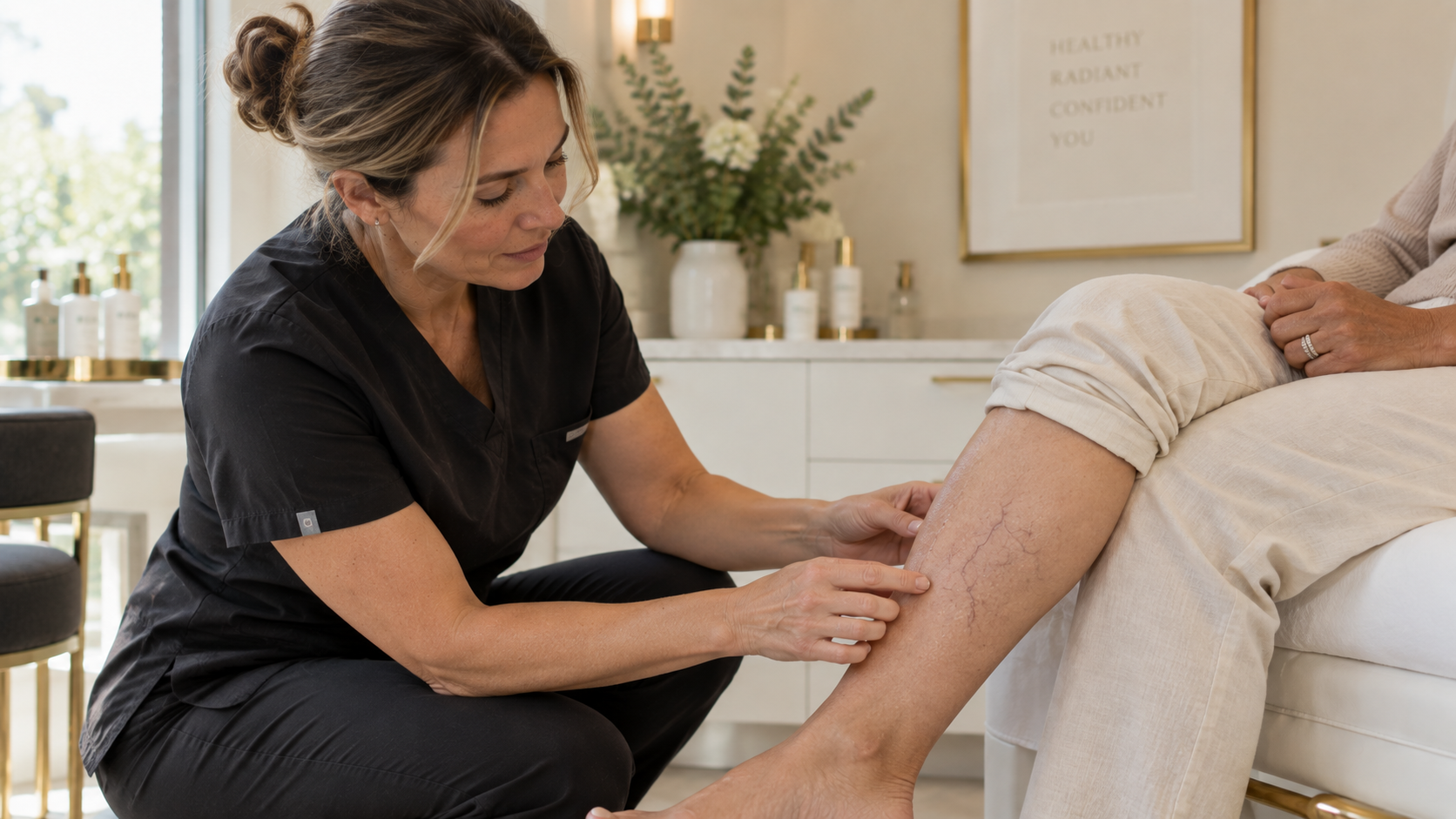
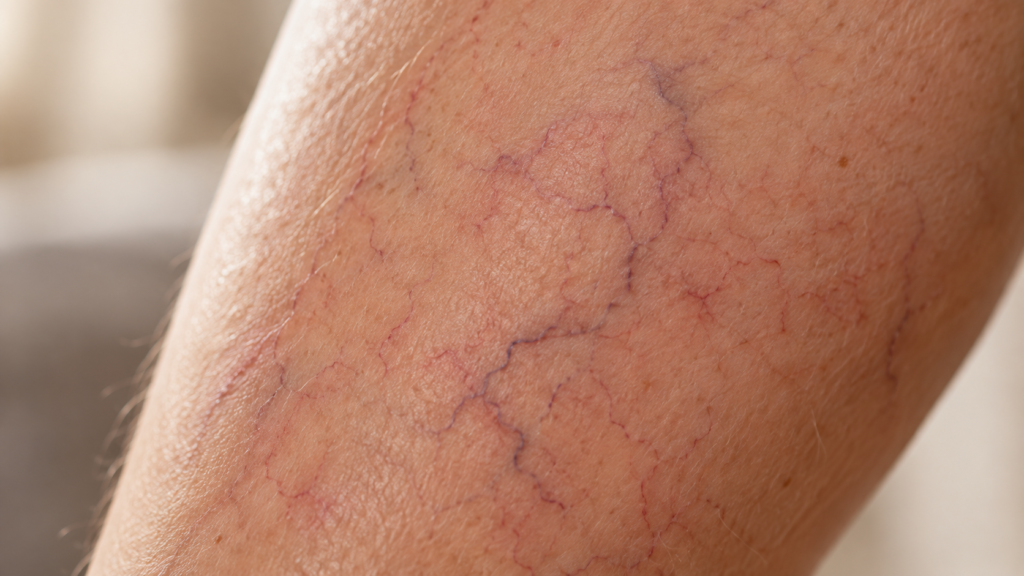
Clusters of leg thread veins are often supplied by a slightly larger bluish vein just beneath them, known as a reticular or feeder vein. If only the surface veins are treated, they can return.
How do you feel about needles?
If injections are a genuine barrier, laser gives you a needle-free route, particularly for finer vessels. It is worth saying that both treatments are generally well tolerated, and many people find sclerotherapy more comfortable than they expected.
What is your skin tone?
Skin tone affects laser settings and suitability, because the laser must target the blood in the vessel without affecting the surrounding pigment. Suitability for either treatment is assessed at consultation, and we will always explain which approach is safest for your skin.
Side Effects: What to Know About Each
Both treatments are considered safe when carried out by trained practitioners, but neither is entirely free of side effects, and it is better to know about them in advance.
After laser, it is common to have redness, mild swelling or a temporary darker appearance of the treated vessel for a few days. Less commonly, there can be temporary changes in skin colour. Careful sun protection before and after treatment helps reduce this risk.
After sclerotherapy, bruising and tenderness are common at first. Two effects are worth understanding properly. The first is brown staining along the treated vein, which usually fades gradually over months. The second is telangiectatic matting, where a fine blush of new tiny vessels appears near the treated area. It often settles on its own, and laser can be used to treat it if it persists.
This is one of the reasons the two treatments are often better thought of as complementary than as rivals.
Using Both Treatments Together
For many people with leg veins, the most effective plan uses both. Sclerotherapy can address feeder veins and larger thread veins first, and laser can then refine the finest remaining vessels or any matting afterwards.
For facial redness, visible vessels sometimes sit alongside broader redness from rosacea. In that case, treating the individual vessels with laser may be combined with a wider approach to redness, such as IPL for rosacea. If flushing and persistent redness are part of your picture, our rosacea treatment page explains the options.
When to See Your GP First
Cosmetic vein treatment is for thread veins that are otherwise harmless. Please speak to your GP before booking either treatment if you have:
- bulging, raised or twisted veins on your legs
- aching, heaviness, throbbing or swelling in your legs
- itching, darkening, hardening or thinning of the skin on your lower legs
- a leg ulcer or a sore that will not heal
- a personal history of blood clots or deep vein thrombosis
- a painful, hot, red or hard vein
These can indicate varicose veins or an underlying circulation problem that needs medical assessment. Treating the surface veins while an underlying problem is left untreated is unlikely to give a lasting result, and in some cases would not be safe.
Treatment is also usually postponed during pregnancy and breastfeeding, and certain medications and health conditions can affect suitability. We will go through your medical history carefully at your consultation.
What Happens at Your Consultation
Every new client begins with a free consultation. We will look closely at the veins you want to treat, where they are, how large they are, whether there are feeder veins involved, and your skin type and medical history. From there we will explain whether laser, sclerotherapy or a combination is the right route, how many sessions are likely, and what results are realistic for you.
If anything suggests that your veins need medical assessment first, we will tell you. You can meet Natalie, our Nurse Prescriber, and the rest of the clinical team on our meet the team page. Current pricing for both treatments is on our price list, and a consultation is the best way to get a personalised quote.
Frequently Asked Questions
Is laser or sclerotherapy better for thread veins? Neither is better in every case. Laser is usually preferred for fine thread veins and broken capillaries on the face and for very fine leg veins, while sclerotherapy is generally the standard treatment for most leg thread veins and small reticular veins. Many people benefit from a combination, and the right choice is confirmed at consultation.
Can sclerotherapy be used on the face? Sclerotherapy is primarily a leg treatment and is not usually used for facial thread veins. For broken capillaries on the nose, cheeks and chin, laser is generally the preferred option.
How many sessions will I need? It depends on the number, size and location of the veins. Some fine facial vessels respond in one or two laser sessions, while leg veins more often need a short course of treatment spaced several weeks apart. We will give you a realistic estimate at your consultation. Results vary between individuals.
Are the results permanent? Veins that have been successfully treated are cleared by the body and do not usually return. However, treatment does not stop new thread veins from forming over time, particularly with genetics, hormonal changes, sun exposure or long periods of standing. Occasional maintenance sessions are common.
Do I need to wear compression stockings after sclerotherapy? Usually, yes. Compression stockings are typically recommended for a period after sclerotherapy to help the treated veins close and to support the final result. We will explain exactly what is needed for your treatment plan.
Is thread vein removal available on the NHS? Thread veins are generally considered a cosmetic concern, so their treatment is not usually available on the NHS. Varicose veins causing symptoms or complications are different and should be assessed by your GP.
What causes broken capillaries on the face? Common contributors include genetics, sun damage, rosacea, ageing, temperature extremes, alcohol and pregnancy. Identifying any underlying cause, particularly rosacea, can help reduce the chance of new vessels forming after treatment.
Book Your Free Consultation
Whether you are concerned about broken capillaries on your face or thread veins on your legs, the right treatment starts with a proper assessment.
Book a free consultation at House of Aesthetics in Bromley and we will look at your veins, talk through your medical history, and recommend the approach that suits them best. There is no obligation and no charge for the consultation.
Call us on 020 8290 0099, visit us at 14 Market Square, Bromley BR1 1NA, or book online.
 Skip to content