Polynucleotides vs Skin Boosters: Why Regeneration Matters More Than Hydration
Understanding why polynucleotides go beyond temporary hydration for long-term skin quality improvement
If you’re researching injectable skin treatments in Bromley or South East London, you’ve likely encountered two popular options: skin boosters and polynucleotides. While both promise improved skin quality, they work in fundamentally different ways and understanding this difference is essential for achieving the results you’re looking for.
Skin boosters have been a trusted choice for years, offering quick hydration and a noticeable glow. However, as our understanding of skin ageing has evolved, a new generation of regenerative injectables has emerged. Polynucleotides don’t just hydrate; they actively support cellular repair, strengthen tissue quality, and deliver long-term improvements that build over time.
At House of Aesthetics in Bromley, we believe informed choices lead to better outcomes. This guide explains the science behind both treatments, helping you understand which approach might be right for your skin.
What Are Skin Boosters?
Skin boosters are injectable treatments designed to deeply hydrate the skin from within. Most formulations contain hyaluronic acid, a naturally occurring molecule that attracts and retains moisture, helping skin appear plumper, smoother and more radiant.
Popular skin booster brands include Profhilo and Lumipro. These treatments work by depositing hyaluronic acid beneath the skin’s surface, where it draws in water and creates an immediate hydration effect.
Benefits of Skin Boosters
Skin boosters excel at delivering rapid improvements in skin radiance and hydration. They soften fine lines caused by dehydration, create a noticeable glow within 7-14 days, and provide an excellent “skin prep” before special events. For younger patients or those primarily concerned with dullness and dehydration, skin boosters remain an effective choice.
However, their effects are largely temporary. Because they work by attracting water rather than stimulating repair, the results gradually fade as the hyaluronic acid is naturally absorbed by the body; typically within 4-6 months.
What Are Polynucleotides?
Polynucleotides (PNs) represent a newer category of injectable treatment that works differently from traditional skin boosters. Rather than simply hydrating the skin, polynucleotides act as bio-stimulators, triggering the skin’s natural repair and regeneration processes.
These biocompatible molecules are derived from highly purified DNA fragments, most commonly sourced from salmon or trout. Through an extensive purification process, the DNA is refined into a sterile, medical-grade injectable suitable for aesthetic use. The final product contains no living cells and does not alter human DNA in any way.
How Do Polynucleotides Work?
Polynucleotides work through several mechanisms that support genuine skin regeneration. They stimulate fibroblast activity; the cells responsible for producing collagen and elastin. They provide anti-inflammatory benefits, reducing redness and calming stressed skin. They support tissue repair at a cellular level, and they improve the overall quality and resilience of the skin matrix.
This regenerative approach makes polynucleotides particularly well-suited for ageing, thinning or fragile skin, including delicate areas such as the under-eyes, neck and décolletage where other treatments may be too aggressive.
Learn more about our Polynucleotides Treatments.Â
The Key Difference: Polynucleotides vs Skin Boosters
The fundamental distinction between these treatments lies in their mechanism of action. Skin boosters add hydration to the skin temporarily. Polynucleotides stimulate the skin to repair and regenerate itself.
Factor | Skin Boosters | Polynucleotides |
|---|---|---|
| Primary Action | Hydrate the skin | Regenerate and repair skin |
| Results Timeline | Visible glow in 7-14 days | Progressive improvement from 3-6 weeks |
| Duration of Results | 4-6 months (temporary) | 6-12 months (cumulative) |
| Mechanism | Attracts water to skin | Stimulates cellular repair |
| Best For | Dehydration, dullness, younger skin | Ageing, thinning, damaged skin |
| Delicate Areas | Limited suitability | Excellent for under-eyes, neck |
| Anti-inflammatory | No | Yes |
Hydration improves how skin looks. Regeneration improves how skin functions. This distinction becomes especially important for patients over 35, or those experiencing hormonal changes, where skin concerns are driven by collagen loss and reduced cellular turnover, not just dehydration.
Why Polynucleotides Often Offer Better Long-Term Value
While skin boosters deliver quick, visible results, polynucleotides address the underlying causes of skin ageing. For many patients, particularly those over 35 or experiencing hormonal skin changes this regenerative approach delivers more meaningful, lasting improvements.
Cellular Repair
Stimulates fibroblasts to produce new collagen and elastin, addressing the root cause of skin laxity.
Cumulative Results
Benefits build with each treatment, creating progressive improvement rather than temporary fixes.
Delicate Area Safe
Ideal for thin, fragile skin around eyes, neck and décolletage where other treatments may be unsuitable.
Anti-Inflammatory
Calms stressed, sensitised skin while simultaneously promoting repair and regeneration.
Rather than repeatedly topping up hydration every few months, polynucleotides help the skin restore its own resilience and strength. For patients seeking genuine improvement in skin quality, not just a temporary glow, this represents a more intelligent long-term investment.
Who Should Consider Polynucleotides?
Polynucleotides May Be Right for You If:
- You’re experiencing skin thinning, crepiness or loss of elasticity
- Your skin appears dull, tired or stressed despite good skincare
- You’re peri-menopausal or menopausal and noticing hormonal skin changes
- You want long-term improvement rather than temporary hydration
- You’re concerned about the delicate under-eye area or neck
- Previous skin boosters haven’t delivered the improvement you hoped for
- You prefer a regenerative, skin-health-focused approach to anti-ageing
It’s worth noting that polynucleotides and skin boosters aren’t mutually exclusive. In some cases, combining both treatments can address multiple concerns simultaneously, using skin boosters for immediate hydration while polynucleotides work on longer-term regeneration.
When Skin Boosters May Be the Better Choice
Skin boosters remain an excellent option in certain circumstances. They suit younger patients (typically under 30) primarily concerned with hydration and glow. They work well as “skin prep” before weddings, events or holidays when quick results are needed. They’re appropriate for patients not yet experiencing significant collagen loss or skin laxity, and they serve as a maintenance treatment between polynucleotide courses.
During your consultation at House of Aesthetics, we assess your skin holistically before recommending any treatment. Our goal is to match you with the approach most likely to deliver the results you’re looking for — whether that’s skin boosters, polynucleotides, or a combination of both.
What to Expect From Polynucleotide Treatment in Bromley
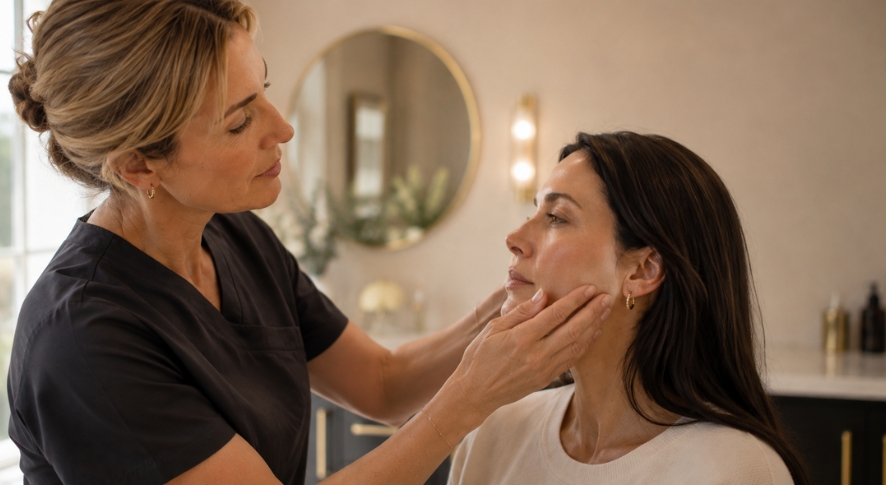
Polynucleotide treatments at House of Aesthetics follow a careful, patient-focused approach. During your free consultation, we assess your skin quality, discuss your concerns and goals, and determine whether polynucleotides are the right choice for you.
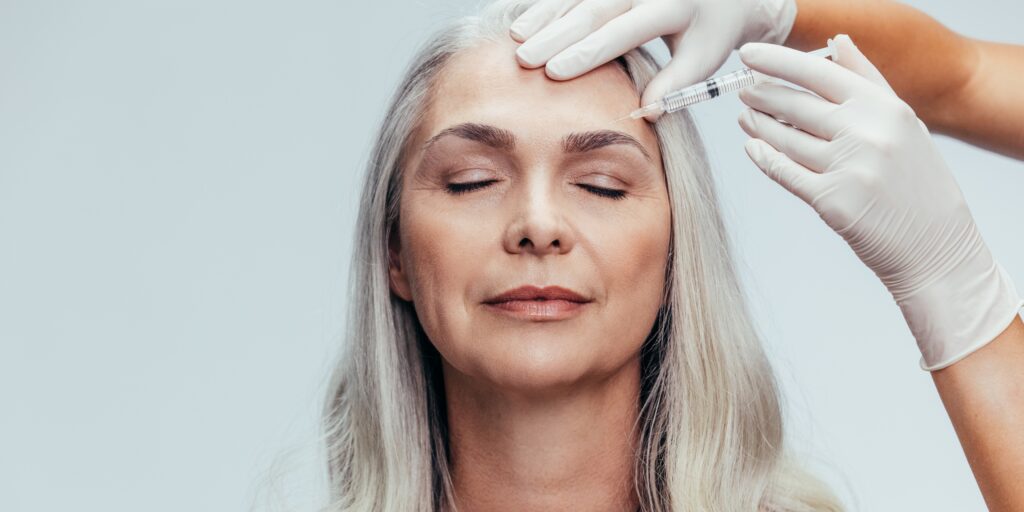
Treatment typically takes 30-45 minutes. We use advanced cannula techniques where appropriate, which can reduce bruising and allow for more precise product placement. Most patients describe the sensation as mild discomfort rather than pain, and numbing cream is applied beforehand.
Unlike skin boosters, polynucleotide results develop gradually. Initial improvements often become visible from 3-4 weeks, with continued enhancement over the following months as cellular repair progresses. A typical treatment course involves 2-3 sessions spaced 3-4 weeks apart.
Frequently Asked Questions
What is the difference between polynucleotides and skin boosters?
Skin boosters primarily hydrate the skin using hyaluronic acid, providing temporary improvements in glow and smoothness that last 4-6 months. Polynucleotides are bio-stimulators derived from purified DNA fragments that regenerate and repair skin at a cellular level, offering longer-lasting improvements in skin quality, elasticity and texture that continue building over time.
How long do polynucleotide results last compared to skin boosters?
Skin booster results typically last 4-6 months and require regular maintenance treatments. Polynucleotide results are cumulative and longer-lasting, with improvements continuing to build over several months. Most patients see optimal results after a course of 2-3 treatments, with effects lasting 6-12 months depending on individual factors.
Are polynucleotides safe?
Yes, polynucleotides have an excellent safety profile. They are biocompatible molecules derived from highly purified salmon or trout DNA through an extensive purification process. The final product contains no living cells and does not alter human DNA. Polynucleotides have been used in medicine for wound healing for decades before being introduced to aesthetic medicine.
Can polynucleotides be used under the eyes?
Yes, polynucleotides are particularly well-suited for delicate areas like the under-eyes, neck and décolletage where the skin is thinner and more fragile. Their regenerative and anti-inflammatory properties make them ideal for treating dark circles, hollow tear troughs, crepey skin and fine lines in these sensitive areas where other treatments may be too aggressive.
Who should choose polynucleotides over skin boosters?
Polynucleotides are particularly beneficial for patients over 35, those experiencing skin thinning or crepiness, peri-menopausal or menopausal women noticing hormonal skin changes, and anyone wanting genuine long-term skin quality improvement rather than temporary hydration. Skin boosters may be more suitable for younger patients primarily seeking a hydration boost or quick glow before events.
How much do polynucleotide treatments cost?
Polynucleotide treatment pricing depends on the areas treated and the number of sessions in your personalised treatment plan. At House of Aesthetics, we provide detailed pricing during your free consultation after assessing your specific needs. We also offer 0% finance options to help make treatments more accessible.
Can I combine polynucleotides with other treatments?
Yes, polynucleotides can be effectively combined with other treatments as part of a comprehensive skin rejuvenation plan. They work well alongside skin boosters (for combined hydration and regeneration), dermal fillers (for volume restoration), and treatments like microneedling or chemical peels. Your practitioner will advise on the optimal treatment sequence and timing.
Ready for Your Regeneration Journey?
Unsure whether skin boosters or polynucleotides are right for you? Our experienced team will assess your skin, discuss your goals, and create a personalised treatment plan tailored to your needs.
Book your free consultation today!