Skin Tag Removal: Costs, Methods, and What to Expect in the UK in 2026
Small, harmless, yet often incredibly frustrating, skin tags are a common dermatological reality for millions of people across the United Kingdom. While these tiny growths do not pose a direct threat to your physical health, they frequently catch on clothing, snag on jewellery, or create a cosmetic insecurity that affects your daily confidence.
As we navigate 2026, the landscape of aesthetic treatments has shifted, with healthcare access and advanced technology changing how patients approach minor skin procedures. If you are looking to clear your skin this year, choosing the right removal method is essential for a flawless, scar-free finish. This comprehensive guide covers the current state of skin tag removal in the UK, evaluating the leading clinical methods, modern pricing models, and exactly what to expect from the ultimate gold-standard treatment: Advanced Cosmetic Electrolysis.
What Exactly Are Skin Tags?
Skin tags, medically known as acrochordons, are benign growths composed of loosely arranged collagen fibres and microscopic blood vessels surrounded by a layer of epidermis. They typically appear as small, flesh-coloured or slightly darker brown pieces of hanging tissue.
While they can develop anywhere on the human body, they are most frequently located in areas where friction occurs, either from skin rubbing against skin or skin rubbing against tight clothing. Common areas of development include:
The neck and neckline
Underarms (axillae)
Around the groin and upper thighs
Beneath the breasts
Around the eyelids and face
Skin tags vary in size from a tiny one-millimetre bump to a substantial five-centimetre growth. Although completely non-cancerous, they can bleed, twist, or become painfully inflamed if repeatedly irritated.
The Reality of Skin Tag Removal on the NHS
A frequent question for UK residents is whether skin tag removal can be completed free of charge via the National Health Service (NHS). The short answer in 2026 remains a definitive no for the vast majority of cases.
The NHS classifies the removal of skin tags as a cosmetic procedure rather than a medically necessary treatment. Because skin tags do not cause physical harm or exhibit malignancy, public funding is strictly reserved for life-altering or high-risk medical conditions. The official NHS guidance on skin tags explicitly states that individuals seeking removal for aesthetic reasons or minor physical discomfort must seek private clinical treatment.
The only rare exceptions where the NHS might intervene involve cases where a skin tag causes profound functional impairment, such as blocking your vision by growing excessively large on an eyelid, or if a doctor suspects that the lesion is not a skin tag but a more serious form of atypical growth requiring a biopsy. Because of this, patients across the UK turn to private aesthetic clinics to have them removed safely and quickly.
Clinical Removal Methods: Why Electrolysis is the Gold Standard
When researching private removal, you will generally come across three clinical methods in the UK market: Cryotherapy (freezing), Surgical Excision (cutting), and Advanced Electrolysis.
While some traditional clinics still rely on freezing or cutting, modern aesthetic science heavily favours Advanced Electrolysis due to its unmatched precision, safety, and superior cosmetic results.
Here is how they compare, and why electrolysis is the chosen method at premium clinics like House of Aesthetics:
| Removal Method | How It Works | Precision & Cosmetic Outcome |
| Advanced Electrolysis | Delivers a precise, low-level electrical current directly into the stalk of the tag, cauterising the blood supply instantly. | Excellent. Meticulous precision that targets only the lesion. Leaves the surrounding skin completely untouched, resulting in a flawless, scar-free finish. Ideal for delicate areas like the face and eyelids. |
| Cryotherapy (Freezing) | Uses liquid nitrogen to freeze the tissue, causing it to blister and eventually drop off. | Variable. Extreme cold can spread slightly to the surrounding healthy skin, which carries a risk of temporary or permanent hypopigmentation (white spots), especially on darker skin tones. |
| Surgical Excision | Physically cuts the skin tag away at the base using a sterile scalpel or surgical scissors. | Invasive. Requires local anaesthetic injections and can cause minor bleeding. It often leaves a small linear scar or mark where the skin was cut. |
The Superior Choice: Advanced Cosmetic Electrolysis
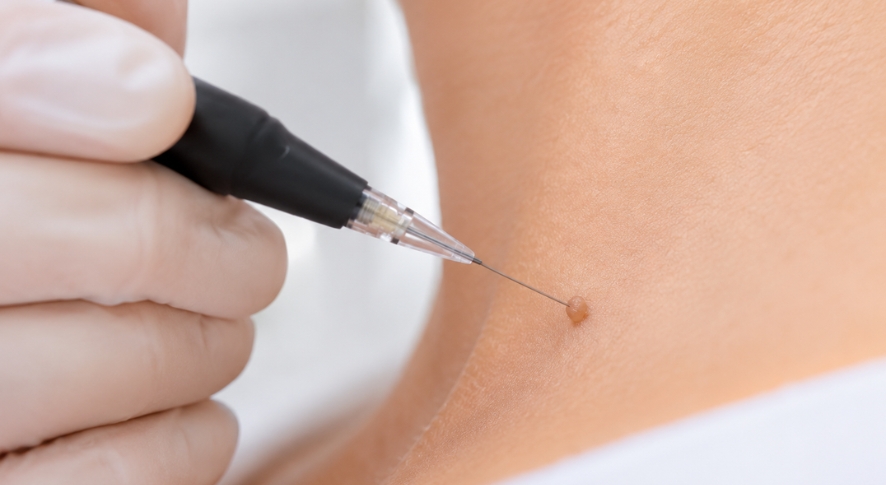
By utilizing a microscopically fine probe to target the exact root of the growth, electrolysis completely eliminates the risk of damaging surrounding healthy tissue. Denied its blood supply by the gentle heat current, the skin tag quickly dries up, shrivels, and naturally falls away within a few days. It is a highly elegant, non-invasive treatment that avoids the harshness of freezing or the trauma of surgical cutting. You can explore this specialized method further on the House of Aesthetics Skin Tag Removal Treatment Page.
What to Expect During Your Electrolysis Appointment
Approaching an aesthetic appointment can occasionally cause minor nerves, but understanding the timeline of an advanced electrolysis procedure helps set your mind at ease.
The Consultation Phase
Every safe clinical journey begins with a detailed, one-on-one consultation. Your practitioner will closely evaluate the target lesions to verify that they are, in fact, benign skin tags and not atypical moles or viral warts. They will assess your skin type, medical background, and discuss the best approach for your specific lesions.
During the Procedure
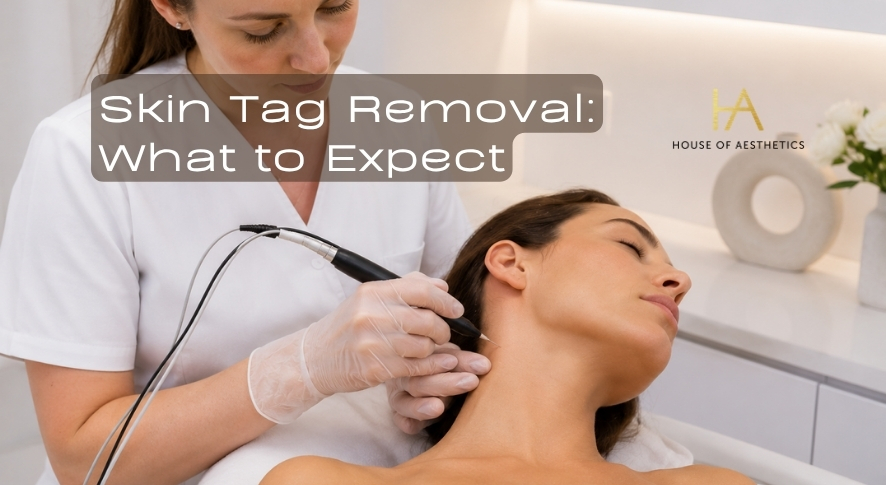
The procedure itself is incredibly straightforward. The area will first be fully cleansed with an medical-grade antiseptic solution. The practitioner will then gently introduce the fine electrolysis probe to the base of the skin tag. The sensation of the low-level current is often described as a minor, warm, pinching pinch or a light stinging feeling. Because the procedure is incredibly fast, individual skin tags can often be treated in less than sixty seconds.
Immediate Aftercare and Recovery
Directly after your treatment, the treated area will look slightly red, and a tiny, clean scab will form over the site within twenty-four to forty-eight hours. The recovery process requires minimal downtime, allowing you to return to work or social activities immediately. Essential aftercare protocols include:
Keeping the treated area perfectly clean and completely dry for the first twenty-four hours.
Resisting the temptation to scratch, pick, or peel the scab, as letting it fall off naturally ensures a flawless, scar-free finish.
Applying a high-quality, broad-spectrum SPF to protect the healing, fresh skin from ultraviolet pigmentation changes.
Avoiding harsh chemical exfoliants, hot tubs, or heavy makeup over the area until the skin has completely closed.
Skin Tag Removal Costs in the UK vs House of Aesthetics
Private clinic pricing across the United Kingdom varies significantly based on your geographic location, the removal method, and any hidden assessment fees.
When navigating the UK market in 2026, many private dermatologists or high-street clinics charge an initial consultation fee ranging between £50 and £150 just to look at the lesion. Furthermore, a single skin tag removal across the wider UK can quickly escalate anywhere from £120 to over £300 depending on the complexity and clinic premium.
At House of Aesthetics, we believe in complete financial transparency and premium care without the hidden obstacles. We contrast with the broader UK average by offering a completely free initial consultation to evaluate your skin. Our advanced electrolysis removal treatments range predictably between £80 and £150 (as of May 2026), offering highly competitive, elite-level clinical care in a comfortable environment.
The final cost within this range depends entirely on the size, position, and total number of skin tags being treated during your session. For a complete look at our competitive pricing structures across all options, you can review the official House of Aesthetics Price List.
Frequently Asked Questions (FAQs)
Can I get my skin tags removed on the NHS? In the vast majority of cases, no. The NHS classifies skin tag removal as a cosmetic procedure rather than a medically necessary treatment. Funding is reserved strictly for life-altering or high-risk medical conditions. Unless a skin tag is causing profound functional impairment, such as severely blocking your vision, you will need to seek private clinical treatment.
Is electrolysis skin tag removal painful? The majority of clients report very minimal discomfort during treatment. The sensation is momentary and closely resembles a light, localized pinch or a quick flash of warmth. Because the procedure is so rapid, most people find it completely manageable without any numbing creams.
Will a removed skin tag grow back? Once a skin tag has been entirely cauterised at its base with electrolysis, that specific skin tag is permanently gone and will not grow back. However, if your skin is naturally prone to developing tags due to systemic factors like friction, genetics, or metabolic changes, new skin tags may appear in nearby areas over time.
Can I safely remove my skin tags at home? Medical professionals strongly advise against attempting home removal. Using commercial DIY freezing kits, tying threads around the tissue, or cutting them off with household tools carries significant risks of severe bacterial infection, uncontrolled bleeding, deep tissue scarring, and incomplete removal which can cause the tag to return larger.
How long does the entire healing process take? The immediate surface healing is incredibly swift. A tiny crust or scab forms within a day or two and typically sheds naturally within seven to fourteen days, revealing beautifully clear, smooth, healthy skin underneath.
Are all skin types suitable for electrolysis removal? Yes, advanced cosmetic electrolysis is perfectly safe and highly effective across all skin types. Unlike cryotherapy, which carries a risk of leaving white marks on deeper skin tones, electrolysis is completely safe for all skin shades and ethnicities because it precisely targets only the lesion itself.
Book Your Free Consultation Today
If you are ready to stop dealing with the irritation of skin tags and achieve smooth, clear skin, the expert team at House of Aesthetics is here to help. Located conveniently in Bromley, our specialists utilize the highest clinical standards and advanced electrolysis techniques to deliver exceptional results with absolute precision.
Take the first step toward restoring your confidence by visiting the House of Aesthetics Skin Tag Removal Clinic to schedule your free skin consultation today.
Medical Disclaimer: The information provided in this article is strictly for educational and informational purposes and does not constitute formal medical advice. Always consult a qualified medical professional or qualified dermatologist before undergoing any clinical, aesthetic, or surgical procedures to ensure an accurate diagnosis of your skin condition.