• Book Your Appointment
  • Buy Your Treatment Now
  • Offers
  • Price List
  • Team
  • Blog
  • Contact Us
Cherry Angiomas Why Red Moles Appear on Your Body and How to Remove Them

Date

Cherry Angiomas: Why Red Moles Appear on Your Body and How to Remove Them

You are in the shower one morning and notice a small, bright red spot on your chest that was not there before. A few weeks later, another appears on your stomach. Then one on your arm. They are tiny, perfectly round, and an unusually vivid shade of red. Naturally, you start to worry.

Take a breath. What you are almost certainly looking at are cherry angiomas, and they are one of the most common and harmless skin growths in existence. They are so common, in fact, that roughly 75% of adults over the age of 75 have at least a few of them. They just do not get talked about as much as moles, skin tags or freckles, which is why they can cause unnecessary alarm when they appear.

This guide explains exactly what cherry angiomas are, why they develop, how to tell them apart from anything that might need medical attention, and how to have them removed if they bother you.

What Are Cherry Angiomas?

Cherry angiomas (also known as Campbell de Morgan spots, ruby spots or senile angiomas) are small, benign growths made up of clusters of tiny blood vessels called capillaries. They form when endothelial cells, the cells that line the inside of blood vessels, proliferate and create a small, dense cluster just beneath the skin’s surface.

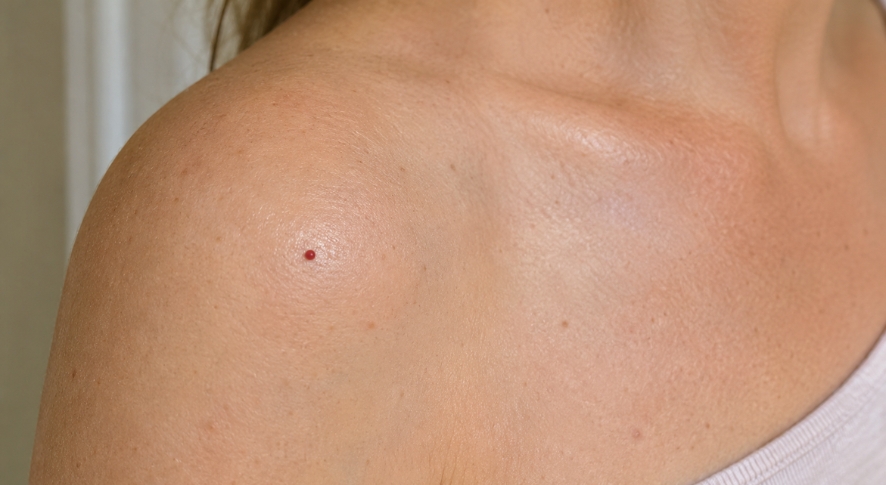
They typically look like:

  • Small, bright red or cherry-coloured dots (the most common appearance)
  • Smooth, slightly raised bumps (dome-shaped or flat)
  • Ranging in size from a tiny pinprick (less than 1mm) to about the size of a pencil eraser (5 to 6mm)
  • Firm to the touch and painless

Their vivid red colour comes from the concentration of blood vessels close to the skin’s surface. Some cherry angiomas darken over time, appearing deeper red, purple or even dark blue. If a cherry angioma develops a blood clot inside it (thrombosis), it can appear black, which can understandably cause concern, but this is still harmless.

Where Do Cherry Angiomas Appear?

Cherry angiomas most commonly appear on the torso. The chest, stomach, back and sides are the most frequent locations. However, they can develop almost anywhere on the body, including:

  • Chest and upper back (the most common area)
  • Stomach and abdomen
  • Shoulders and upper arms
  • Neck
  • Scalp
  • Legs and thighs
  • Face (less common but possible)

They rarely appear on the hands, feet or inside the mouth.

Why Do Cherry Angiomas Form?

The exact cause is not fully understood, but several factors are strongly associated with their development.

Age

This is the biggest factor. Cherry angiomas become significantly more common after the age of 30, and their number typically increases with each decade. Research from DermNet NZ estimates that around 5% of adolescents have cherry angiomas, rising to approximately 75% of adults over 75. If you are in your 30s or 40s and noticing your first red spots, you are right on schedule. (Source: DermNet NZ)

Genetics

If your parents or grandparents have a lot of cherry angiomas, you are more likely to develop them too. Research has identified specific genetic mutations (in genes called GNAQ and GNA11) that are associated with cherry angioma formation, suggesting there is a hereditary component.

Hormonal changes

Pregnancy, hormonal contraceptives and other hormonal fluctuations have been linked to the appearance of new cherry angiomas or the growth of existing ones. This is one reason why some women notice them appearing or increasing during pregnancy.

Sun exposure and environmental factors

Prolonged UV exposure and certain environmental toxins have been associated with increased cherry angioma development. While sun exposure is not as direct a cause as it is for some other skin conditions, it is likely a contributing factor, particularly on the chest and shoulders where sun exposure is common.

Liver health

There is some evidence linking cherry angiomas to liver function. Conditions that affect the liver, including non-alcoholic fatty liver disease, can be associated with an increase in cherry angiomas. This is worth mentioning not because cherry angiomas are dangerous, but because a sudden, large increase in their number can occasionally be a prompt for your GP to check your liver health.

Cherry Angiomas Why Red Moles Appear on Your Body and How to Remove Them

Are Cherry Angiomas Dangerous?

No. Cherry angiomas are completely benign. They are not cancerous, they do not become cancerous, and they are not a sign of cancer.

However, this reassurance comes with one important caveat: you need to be confident that what you are looking at actually is a cherry angioma and not something else. A small number of skin conditions can look similar to cherry angiomas, and some of those do require medical attention.

When to see your GP

You should have a spot checked by your GP or a dermatologist if:

  • It is growing rapidly in size
  • It has an irregular shape or uneven colour (cherry angiomas are typically uniform and symmetrical)
  • It is changing in appearance over weeks
  • It bleeds frequently or does not heal
  • It looks different from your other cherry angiomas (the “ugly duckling” sign)
  • A large number of new spots appear very suddenly (a sudden eruption of many new angiomas can occasionally be associated with underlying conditions)
  • You are simply unsure whether it is a cherry angioma or something else

When in doubt, get it checked. Your GP can usually identify a cherry angioma by looking at it, and can refer you to a dermatologist if they want a closer examination with a dermatoscope.

Do Cherry Angiomas Go Away on Their Own?

No. Once a cherry angioma has formed, it is permanent. It will not shrink, fade or disappear by itself. Some may grow slightly larger over time, and new ones will likely continue to appear as you age, but existing ones will stay unless they are professionally removed.

No cream, supplement or home remedy has been proven to remove cherry angiomas. Over-the-counter products marketed for “red mole removal” are, at best, ineffective and, at worst, can damage the surrounding skin or cause scarring.

How Are Cherry Angiomas Removed?

If your cherry angiomas are bothering you cosmetically, catching on clothing or jewellery, or occasionally bleeding, professional removal is quick, straightforward and effective. There are several proven methods.

CryoPen (cryotherapy)

CryoPen treatment uses a precisely targeted jet of nitrous oxide at -89°C to freeze the cherry angioma. The extreme cold destroys the blood vessels within the growth, causing it to blister, dry out and fall off naturally within 1 to 2 weeks.

CryoPen is one of the most popular methods for cherry angioma removal because it is fast (just a few seconds per spot), requires no anaesthetic, and can treat multiple angiomas in a single session. It is particularly well-suited to smaller cherry angiomas on the body.

Advanced electrolysis (electrocautery)

Advanced electrolysis uses a fine probe to deliver a controlled electrical current directly to the cherry angioma. The current cauterises the blood vessels, cutting off the blood supply and causing the angioma to shrink and eventually disappear. For smaller angiomas, the result is often immediate.

This method offers excellent precision, making it a good choice for cherry angiomas on the face, neck or other areas where accuracy matters. It is also effective for slightly larger or raised angiomas that may not respond as well to cryotherapy alone.

Which method is better?

Both methods are effective and safe. The best choice depends on the size, location and number of your cherry angiomas. At House of Aesthetics, we offer both CryoPen and advanced electrolysis and will recommend the most appropriate option during your free consultation. In many cases, your practitioner can remove your cherry angiomas on the same day as your consultation.

For a broader look at how these two methods compare across different skin blemishes, read our guide to milia removal: electrolysis vs CryoPen.

Does the NHS Remove Cherry Angiomas?

In most cases, no. The NHS classifies cherry angioma removal as a cosmetic procedure, which means it is not routinely funded. Your GP may agree to refer you for removal if a cherry angioma is regularly bleeding, causing functional problems, or if there is any uncertainty about the diagnosis that warrants further investigation. But for the vast majority of people, private removal is the only practical option.

At House of Aesthetics in Bromley, we offer cherry angioma removal with a free initial consultation. No GP referral is needed, and we can often treat you on the same day.

What to Expect During and After Removal

During the appointment

Your practitioner will first examine your cherry angiomas to confirm the diagnosis and check that each spot is suitable for treatment. The removal itself takes just a few seconds per angioma. For CryoPen, you will feel a brief cold sensation. For electrolysis, you will feel a quick, warm prick. Most patients find both methods very manageable without any anaesthetic, though numbing cream can be applied if you prefer.

A session treating multiple cherry angiomas rarely takes longer than 20 to 30 minutes.

After the appointment

You may notice some redness, a small scab or slight swelling at each treatment site. This is normal and typically resolves within a few days for electrolysis, or 1 to 2 weeks for CryoPen (where the frozen tissue needs time to dry and shed naturally). Do not pick at the scabs. Keep the area clean, avoid direct sun exposure on the treated sites, and apply SPF 30+ if the area is exposed to sunlight.

Once healed, the cherry angioma is gone. It will not regrow in the same spot. However, new cherry angiomas may appear elsewhere on the body over time, as the underlying tendency to develop them does not change.

Can You Prevent Cherry Angiomas?

There is currently no proven way to prevent cherry angiomas from forming. Since age and genetics are the two biggest factors, and you cannot change either of those, the focus is on managing them rather than preventing them.

That said, a few general skin health habits may help to some degree:

  • Consistent SPF use protects the skin from UV-driven damage that may contribute to angioma formation
  • A balanced diet rich in antioxidants supports overall skin health and may reduce oxidative stress on blood vessels
  • Moderate alcohol consumption supports liver health, which has been linked to cherry angioma prevalence
  • Regular skin checks help you stay familiar with your skin so you notice any changes early

Frequently Asked Questions

Are the small red dots on my body cherry angiomas?

Very likely, especially if they are bright red, smooth, round, painless and started appearing after your 30s. Cherry angiomas are one of the most common skin growths and affect the majority of adults as they age. If you are unsure, a quick consultation with your GP or a qualified aesthetic practitioner can confirm the diagnosis.

Why am I suddenly getting lots of red moles?

It is common to notice several cherry angiomas appearing within a short period, particularly during your 30s and 40s when they typically begin developing. Hormonal changes (such as pregnancy), sun exposure and ageing all contribute. If a very large number appear very suddenly, it is worth mentioning to your GP, as this can occasionally be associated with hormonal changes or liver health.

Can I remove cherry angiomas at home?

We would not recommend it. Home removal methods (freezing kits, burning, cutting) carry real risks of infection, scarring and incomplete removal. Over-the-counter products marketed for red mole removal are not clinically proven to work. Professional removal with CryoPen or electrolysis is quick, safe and far more effective.

Does cherry angioma removal hurt?

Most patients describe the sensation as a brief, sharp prick (electrolysis) or a quick cold sting (CryoPen). Each spot takes just a few seconds to treat. It is noticeable but very manageable, and most people do not need any numbing cream.

How much does it cost to have cherry angiomas removed?

Costs depend on the number of angiomas being treated and the method used. At House of Aesthetics, your consultation is always free, and we provide a clear quote before any treatment begins. We also offer flexible payment options through Klarna, Clearpay and Omni Capital. For more detail on removal pricing, read our guide to removing skin tags, cherry angiomas, milia and warts.

Are cherry angiomas the same as spider veins?

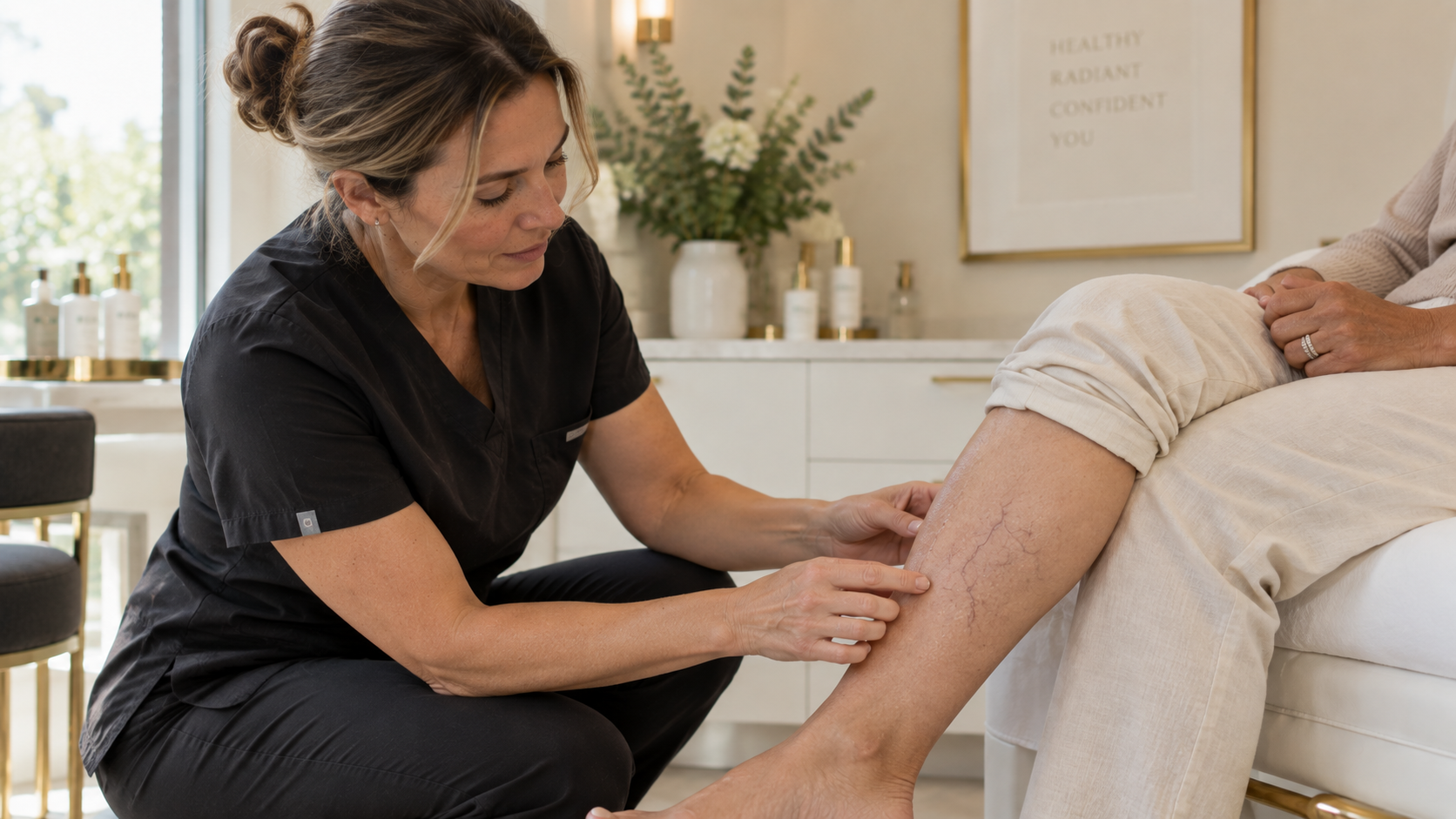
No. Cherry angiomas are small, solid, dome-shaped clusters of blood vessels. Spider veins (also called thread veins) are thin, branching veins visible through the skin, usually on the legs or face. They look quite different and are treated differently. We offer sclerotherapy for thread veins at our Bromley clinic.

Do cherry angiomas mean something is wrong with my health?

In the vast majority of cases, no. Cherry angiomas are a normal part of ageing and are found in healthy people of all ages. However, a sudden, large eruption of many new angiomas can occasionally be linked to hormonal changes, liver conditions or, very rarely, other underlying factors. If you are concerned about a sudden increase, speak to your GP.


Book Your Free Cherry Angioma Consultation in Bromley

If your cherry angiomas are bothering you and you would like them removed, we can help. At House of Aesthetics, your consultation is always free, and in many cases we can treat you on the same day. We offer both CryoPen and advanced electrolysis, so we can recommend the best approach for your specific spots.

Book your free consultation: houseofaestheticslondon.com/contact-us/#freeconsult

Call us: 020 8290 0099

Visit us: 14 Market Square, Bromley, South East London, BR1 1NA


Medical Disclaimer: This article is for informational purposes only and does not constitute medical advice. Cherry angiomas are benign, but other skin conditions can resemble them. If you are unsure whether a spot is a cherry angioma, or if it is changing in size, shape or colour, please consult your GP. Removal of cherry angiomas should be performed by a trained practitioner. If you have a medical condition or are taking medication, please discuss your suitability with your practitioner during your consultation.

More
articles