• Book Your Appointment
  • Buy Your Treatment Now
  • Offers
  • Price List
  • Team
  • Blog
  • Contact Us
Skin Tightening After Weight Loss: What Non-Surgical Options Are Available?

Date

Skin Tightening After Weight Loss: What Non-Surgical Options Are Available?

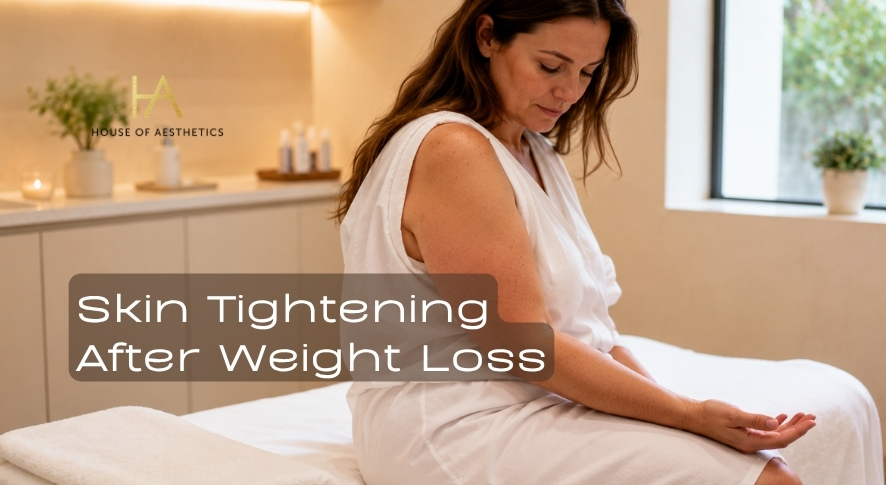
Losing a significant amount of weight is one of the best things you can do for your health. But for many people, reaching their goal weight comes with an unexpected frustration: the skin does not always follow the body. Loose, sagging skin on the stomach, arms, thighs or face can feel like a reminder of the body you worked so hard to change, and no amount of exercise or moisturiser seems to make much difference.

The good news is that non-surgical skin tightening has come a long way in recent years. You do not necessarily need surgery to see a real improvement. This guide explains why loose skin happens after weight loss, which areas are most commonly affected, and the non-surgical treatments that can genuinely help your skin catch up with the rest of your transformation.

Why Does Skin Become Loose After Weight Loss?

Your skin is remarkably elastic, but that elasticity has its limits. When your body carries extra weight for an extended period, the skin stretches to accommodate it. Over time, the collagen and elastin fibres that give your skin its bounce and firmness become damaged by this sustained stretching. They can only be stretched so far before they lose the ability to snap back.

When the weight comes off, the underlying fat is gone but the skin that stretched to cover it remains. Without adequate collagen and elastin to contract it back into place, it hangs loose.

Several factors determine how much loose skin you are left with:

How much weight you lost. The more weight lost, the more likely you are to have noticeable loose skin. People who lose 20kg or more often experience it to some degree.

How quickly you lost it. Rapid weight loss gives the skin less time to gradually adjust. Slower, steadier weight loss tends to produce less loose skin because collagen has more opportunity to remodel along the way. This is one reason why skin laxity has become a widely discussed side effect of GLP-1 medications like Ozempic and Mounjaro, which can produce significant weight loss in a relatively short period.

Your age. Collagen production naturally decreases with age, dropping by roughly 1 to 1.5% per year from your mid-twenties. The older you are when you lose weight, the less collagen your body has available to tighten things back up.

How long you carried the extra weight. The longer your skin was stretched, the more the collagen and elastin fibres are damaged and the harder it is for them to recover.

Genetics and skin type. Some people naturally have more elastic skin than others. Genetics play a meaningful role in how well your skin bounces back.

Sun exposure and smoking. Both accelerate collagen breakdown, which means skin that has been exposed to UV damage or cigarette smoke is less capable of contracting after weight loss.

Which Body Areas Are Most Affected?

Loose skin after weight loss does not affect every area equally. The most common trouble spots include:

  • Stomach and abdomen: This is the area where most people notice it first, especially after pregnancy or significant abdominal weight loss.
  • Upper arms: The underside of the upper arms often develops a “bingo wing” effect that can be difficult to address through exercise alone.
  • Inner thighs: The skin here is naturally thinner and tends to lose elasticity faster than other areas.
  • Chest and breasts: Volume loss in the breasts after weight loss frequently leads to sagging and loss of shape.
  • Face and neck: Weight loss can cause the face to look hollow or gaunt, and the skin around the jawline and neck may lose definition.
  • Back: Skin folds on the upper and lower back are common after larger weight loss.

The Honest Truth: What Can Non-Surgical Treatments Achieve?

Before we go through the options, it is worth setting realistic expectations. Non-surgical treatments can meaningfully improve mild to moderate skin laxity. They work by stimulating your body’s own collagen production, which gradually tightens and firms the skin over a series of sessions.

However, if you have very significant loose skin (large hanging folds, particularly on the abdomen or upper arms after losing 40kg+), non-surgical treatments alone may not be enough to achieve the result you want. In those cases, surgical options like a tummy tuck or arm lift may be worth discussing with a specialist.

For most people with mild to moderate loose skin after weight loss, the non-surgical options below can deliver a noticeable, genuine improvement.

The Best Non-Surgical Treatments for Skin Tightening After Weight Loss

Morpheus8 (RF Microneedling)

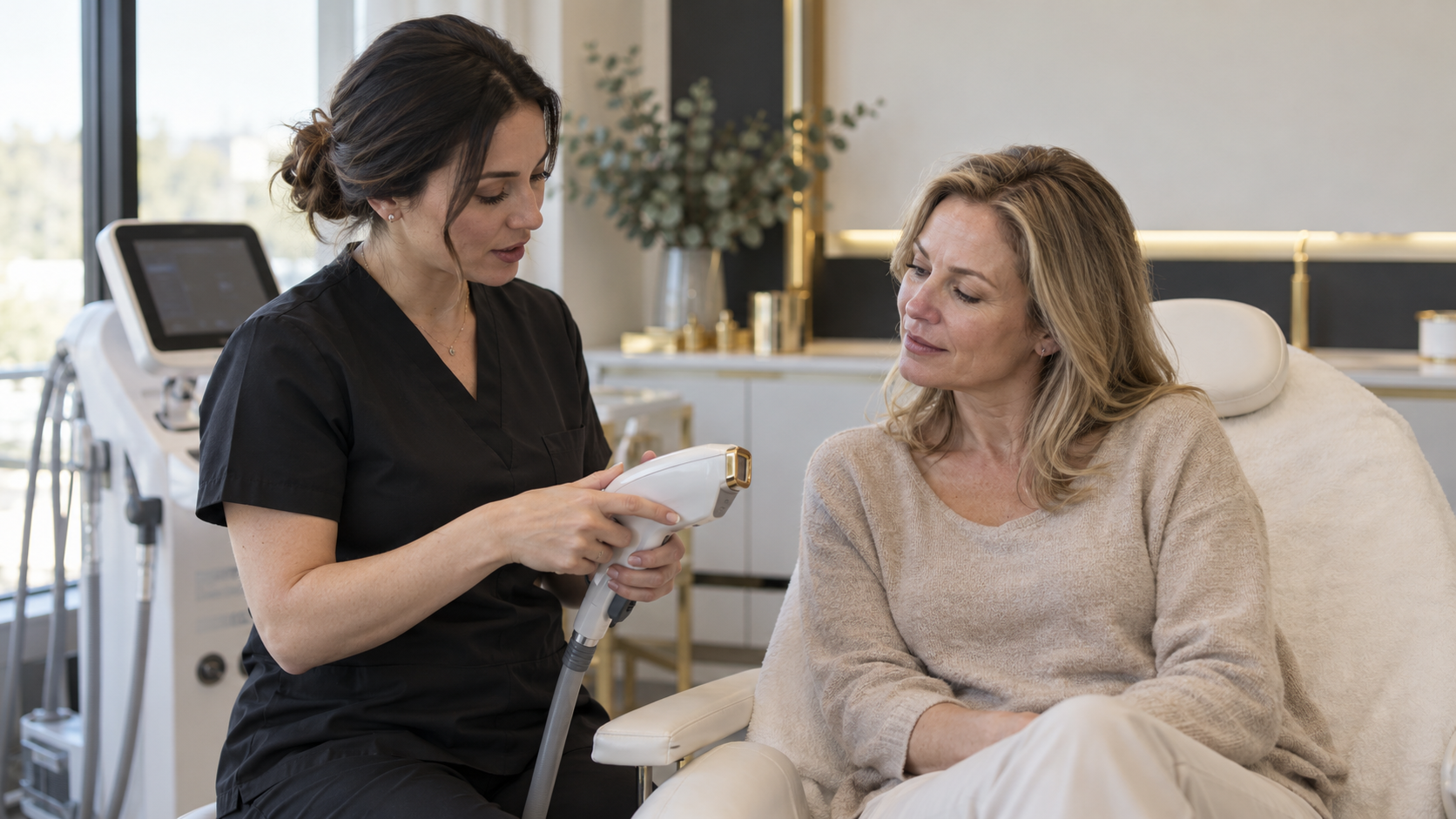
What it does: Morpheus8 is the treatment we recommend most often for post-weight-loss skin tightening. It combines radiofrequency energy with microneedling to deliver controlled heat deep into the dermis, at depths of up to 4mm on the face and up to 8mm on the body. This triggers a powerful collagen and elastin response, tightening existing collagen fibres while stimulating the production of new ones.

Why it works for weight loss skin: Unlike treatments that only work on the skin’s surface, Morpheus8 reaches the deeper layers where the structural damage from stretching actually occurs. It rebuilds the scaffolding that supports your skin from underneath, which is exactly what loose skin after weight loss needs.

Where it works: Face, neck, jawline, stomach, arms, thighs, knees, chest. The Morpheus8 Body handpiece is specifically designed for larger treatment areas like the abdomen.

What to expect: Most people need 3 to 4 sessions spaced 4 to 6 weeks apart. Results develop gradually over 3 to 6 months as collagen remodelling takes effect. Downtime is minimal: expect 2 to 3 days of redness and mild swelling. It is safe for all skin types and tones.

What the evidence shows: Clinical research consistently supports RF microneedling for skin tightening and rejuvenation. A 2026 systematic review published in the Journal of Cosmetic Dermatology concluded that radiofrequency microneedling delivers significant improvements in skin tightening and texture with high patient satisfaction and manageable recovery.

Learn more about Morpheus8

Skin Tightening After Weight Loss: What Non-Surgical Options Are Available?

Professional Microneedling

What it does: Professional microneedling uses a device with fine, sterile needles to create thousands of controlled micro-injuries in the skin. This triggers your body’s wound-healing response, stimulating fresh collagen and elastin production over the following weeks and months.

Why it works for weight loss skin: While microneedling does not reach the same depth as Morpheus8, it is effective for improving overall skin texture, smoothness and firmness. It works particularly well for facial skin tightening and for areas where the laxity is mild.

Where it works: Face, neck, decolletage, and smaller body areas. For larger areas like the abdomen or thighs, Morpheus8 is usually more effective because it reaches deeper and covers more ground.

What to expect: A course of 3 to 6 sessions spaced 4 to 6 weeks apart. Expect mild redness for 24 to 48 hours after each session. Results build with each treatment as new collagen continues to develop. Suitable for all skin types.

Learn more about microneedling

Skin Boosters (Profhilo and LumiPro)

What they do: Skin boosters like Profhilo and LumiPro deliver hyaluronic acid directly into the skin to improve hydration, elasticity and overall skin quality. They do not add volume in the way that dermal fillers do. Instead, they work by deeply hydrating the skin and stimulating a natural collagen and elastin response.

Why they work for weight loss skin: Loose skin after weight loss is often dehydrated and depleted. Skin boosters restore the moisture and plumpness that weight loss strips away, which helps the skin look and feel firmer. They are particularly effective for crepey, thin skin on the face, neck, hands and decolletage.

Where they work: Face, neck, hands, decolletage, under-eyes. Less commonly used on larger body areas, where Morpheus8 is usually a better option.

What to expect: Typically 2 to 3 sessions spaced 4 weeks apart, with maintenance every 6 to 12 months. Results are gradual and natural-looking. There is no downtime.

Read our LumiPro vs Profhilo comparison

Polynucleotides

What they do: Polynucleotides are one of the newest and most exciting treatments in skin rejuvenation. They work at a cellular level, stimulating your skin’s own repair processes to improve elasticity, hydration and thickness over time.

Why they work for weight loss skin: After weight loss, the skin is structurally weakened. Polynucleotides address this at the deepest level by encouraging the skin to regenerate and repair itself. They are especially good for areas where the skin has become thin and crepey, like under the eyes, the neck and the backs of the hands.

Where they work: Face, under-eyes, neck, hands, decolletage. They can also be used on the body in targeted areas.

What to expect: Usually 2 to 3 sessions spaced 3 to 4 weeks apart. Results develop over several weeks and continue improving as the skin’s repair processes take effect. Minimal downtime.

Learn more about polynucleotides

IV Drip Therapy (Supporting From the Inside)

What it does: IV drip therapy delivers vitamins, antioxidants and minerals directly into your bloodstream, bypassing the digestive system for maximum absorption. While it does not tighten skin on its own, it supports the body’s ability to produce collagen and repair tissue, which enhances the results of your other treatments.

Why it helps after weight loss: Weight loss can deplete your body’s nutrient reserves. IV drips help replenish what has been lost and give your skin the building blocks it needs to respond well to collagen-stimulating treatments. Our Glutathione and Vitamin C drip is particularly relevant here, as both ingredients are essential for collagen synthesis and skin health.

What to expect: Sessions take 30 to 50 minutes. No downtime. Most patients have weekly or fortnightly sessions over a course. IV drips work best as part of a broader treatment plan rather than as a standalone skin tightening solution.

View our IV drip treatments

Which Treatment Is Best for Which Area?

Body AreaBest TreatmentWhy
Stomach and abdomenMorpheus8 BodyReaches up to 8mm depth; covers large areas; addresses both laxity and texture
Upper armsMorpheus8 BodyEffective for the crepey, thin skin on the underside of the arms
ThighsMorpheus8 BodyDeep RF energy firms skin across larger surface areas
Face and jawlineMorpheus8 Face or skin boostersMorpheus8 for tightening; skin boosters for hydration and skin quality
NeckMorpheus8, polynucleotides or skin boostersCombination approach works best; the neck skin is thin and benefits from multiple treatments
Under-eyesPolynucleotides or skin boostersThese delicate areas respond best to gentler, hydration-focused treatments
Hands and decolletageSkin boosters or polynucleotidesImproves crepey texture and restores hydration

Getting the Best Results: A Combination Approach

The most effective results after weight loss usually come from combining treatments rather than relying on one alone. Each treatment works through a different mechanism, and layering them together produces a more complete transformation.

A typical combination plan might look like this:

Morpheus8 as the foundation, tightening and rebuilding collagen in the deeper layers of the skin. This does the heavy structural work.

Skin boosters or polynucleotides to improve the quality, hydration and elasticity of the skin itself. This addresses the surface-level crepiness and dryness that Morpheus8 alone may not fully resolve.

IV drip therapy to support your body’s ability to produce collagen and repair tissue from the inside, giving your other treatments the best possible chance of success.

A strong daily skincare routine including SPF 30+ (to protect new collagen from UV damage), a vitamin C serum (to support collagen synthesis) and a retinoid (to maintain cell turnover).

Your practitioner will design a personalised plan based on which areas you want to address, how much laxity is present, and your budget.

What About Exercise? Can It Tighten Loose Skin?

Exercise is brilliant for your overall health, and strength training in particular helps build muscle mass underneath the skin, which can improve the appearance of mild laxity. Building muscle in the arms, legs and core creates more structure for the skin to sit over, which can reduce the “hanging” effect.

However, exercise cannot rebuild damaged collagen or stimulate the kind of deep tissue remodelling that professional treatments achieve. If your loose skin is moderate to significant, exercise alone is unlikely to resolve it. The best approach is to combine regular exercise (particularly resistance training) with professional skin tightening treatments for a more complete result.

How Long Do Results Take?

Patience is important with skin tightening. Unlike a HydraFacial that delivers instant brightness, collagen-based treatments take time to show their full effect because you are waiting for your body to build new structural proteins.

TimeframeWhat to Expect
Weeks 1 to 2Initial tightness and mild improvement as the skin begins to respond.
Months 1 to 2Noticeable improvements in firmness and texture as collagen production accelerates.
Months 3 to 6Full results emerge. Skin continues to tighten and firm as collagen and elastin remodelling peaks.
Months 6 to 12Ongoing improvement. Many patients report continued tightening for up to a year after their last session.

Most treatment plans involve 3 to 4 sessions over 3 to 4 months, with results continuing to develop long after the final appointment. Annual maintenance sessions help sustain the improvements over time.

Frequently Asked Questions

Can you really tighten loose skin without surgery?

Yes, for mild to moderate laxity. Non-surgical treatments like Morpheus8 stimulate deep collagen production that genuinely tightens and firms the skin. They will not produce the same result as a surgical procedure for very significant loose skin, but for most people, the improvement is substantial enough to feel confident without going under the knife.

Which is the best treatment for loose skin on the stomach after weight loss?

Morpheus8 Body is our go-to recommendation for the abdomen. It reaches up to 8mm into the skin, which is deep enough to trigger meaningful collagen remodelling in this area. A course of 3 to 4 sessions typically produces noticeable tightening and improved skin texture.

Does Morpheus8 work for Ozempic or Mounjaro weight loss skin?

Yes. GLP-1 medications can cause relatively rapid weight loss, which sometimes leaves the skin less time to adjust. Morpheus8 is well-suited to addressing this because it rebuilds the collagen and elastin that rapid weight loss depletes. We are seeing increasing demand for this specific concern at our clinic.

How much does non-surgical skin tightening cost?

Costs vary by treatment and the areas being addressed. Morpheus8 starts from around £350 per session for a single area, with course discounts available. Skin boosters and polynucleotides range from £200 to £400 per session. During your free consultation, we will provide a clear quote based on your specific treatment plan. We also offer flexible payment options through Klarna, Clearpay and Omni Capital.

Is non-surgical skin tightening painful?

Most patients find these treatments very manageable. Numbing cream is applied before Morpheus8 and microneedling, so the sensation is typically a warm, prickling feeling rather than anything painful. Skin boosters and polynucleotide injections involve small, fine needles and mild discomfort that settles quickly.

When should I start skin tightening treatments after weight loss?

Ideally, once you have reached or are close to your goal weight. Starting treatment while you are still actively losing significant weight means the skin may stretch or loosen further, reducing the effectiveness of what you have already achieved. That said, if you have plateaued or are within a few kilograms of your target, it is a good time to begin.


Book Your Free Skin Tightening Consultation in Bromley

If loose skin is the one thing standing between you and feeling truly confident after your weight loss, a conversation with our team is the best place to start. During your free consultation at House of Aesthetics, we will assess your skin, discuss which areas you want to address, and recommend a realistic treatment plan tailored to your body and your budget.

Book your free consultation: houseofaestheticslondon.com/contact-us/#freeconsult

Call us: 020 8290 0099

Visit us: 14 Market Square, Bromley, South East London, BR1 1NA


Sources

  1. Kumar A, et al. (2026) Radiofrequency Microneedling for Facial Rejuvenation: A Systematic Review. Journal of Cosmetic Dermatology. https://onlinelibrary.wiley.com/doi/10.1111/jocd.70845
  2. Nistico SP, et al. (2023) Radiofrequency Microneedling: Technology, Devices, and Indications in the Modern Plastic Surgery Practice. Aesthetic Surgery Open Forum. https://www.ncbi.nlm.nih.gov/pmc/articles/PMC11181949/
  3. Bodendorf MO, et al. (2022) Radiofrequency Microneedling for Skin Tightening of the Lower Face and Neck. Dermatologic Surgery. https://journals.lww.com/dermatologicsurgery/abstract/2022/12000/radiofrequency_microneedling_for_skin_tightening.7.aspx
  4. NHS. Keeping Skin Healthy. https://www.nhs.uk/live-well/healthy-body/skin-care-tips/

Medical Disclaimer: This article is for informational purposes only and does not constitute medical advice. Individual results vary depending on the degree of skin laxity, age, skin type and treatment compliance. Non-surgical skin tightening treatments produce the best results for mild to moderate laxity; significant loose skin may require surgical intervention. All treatments should be preceded by a thorough consultation to assess suitability. If you have a medical condition or are taking medication, please discuss this with your practitioner before booking.

More
articles